The value of an event is decided in the days after it, not during it. Conversations that felt promising on the show floor go cold within a week if nothing follows. This playbook covers the window that matters most — the first 72 hours — and the preparation that makes that window productive rather than frantic.
Before: prepare the accounts worth meeting
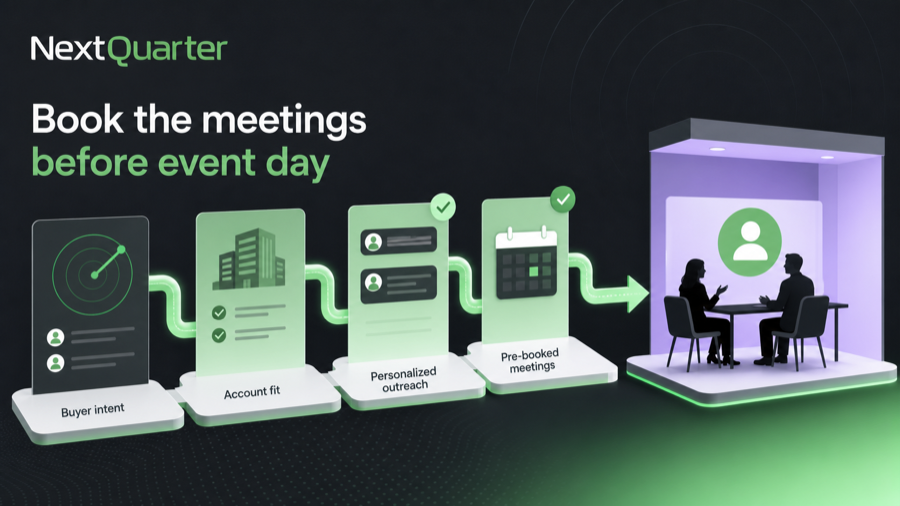
Good follow-up starts before the event. Knowing which accounts are worth meeting, who from them is attending and what each conversation should aim to achieve means the follow-up writes itself. Walk in with that context and the 72-hour window becomes about momentum, not reconstruction.
During: capture what was actually said
Memory fades fast at a busy event. The discipline is to capture the substance of each conversation immediately — what the person cares about, what they committed to and the specific next step — so the follow-up references the real discussion rather than a generic thank-you.
After: follow up while it is warm
- Prioritise by intent — start with the conversations that showed a real next step.
- Reference the specific discussion, not the fact that you both attended.
- Make the next action concrete and easy to accept.
- Route each account to the right owner so nothing stalls in a shared inbox.
Teams that run this rhythm consistently convert a far higher share of event conversations into pipeline — not because they met more people, but because they followed up on the right ones before the moment passed.